

In 2025, real estate floor plans are no longer just technical drawings—they are the foundation for inspiring buyer imagination and boosting property value. The way homes are presented has rapidly evolved, with digital innovation and shifting buyer expectations driving a new era in property marketing.
Today, sellers and agents who embrace the latest trends in real estate floor plans gain a clear edge in the marketplace. Want to attract more buyers and maximize your sale? This guide delivers actionable insights and expert tips for leveraging floor plans to achieve results.
Explore everything from floor plan basics and cutting-edge technologies to design trends, marketing strategies, and practical advice for buyers and sellers.
The Importance of Floor Plans in Real Estate
In 2025, real estate floor plans have become essential tools for buyers, sellers, and agents. With the rise of digital property marketing and remote home shopping, these visual layouts are no longer optional. They provide a clear map of a home's structure, making it easier for everyone to understand the space and envision its potential.

Why Real Estate Floor Plans Matter in 2025
The way people buy and sell homes is evolving rapidly. Buyers expect more transparency and detail before they ever step foot in a property. Real estate floor plans bridge the gap between curiosity and confidence. By offering a comprehensive view of layout, flow, and functionality, they help buyers quickly assess whether a home fits their needs. For sellers and agents, this means fewer wasted showings and more qualified inquiries.
Data: The Power of Floor Plans in Decision-Making
According to Zillow, 69% of buyers say dynamic floor plans are crucial in determining if a home is right for them. This statistic highlights just how influential real estate floor plans are in the buyer journey. Listings that include detailed or interactive floor plans tend to stand out in crowded online marketplaces. They attract more clicks, longer viewing times, and increased engagement from potential buyers.
Enhancing Listings and Virtual Tours
Today, real estate floor plans are central to online listings, virtual tours, and remote buying decisions. Interactive floor plans, in particular, allow users to click on rooms, view integrated photos, and even take virtual walkthroughs. These features make it easier for buyers to explore properties from anywhere in the world. As detailed in Interactive Floor Plans: Revolutionizing the Home Buying Experience, such innovations boost engagement and streamline the home buying process, especially for remote and international clients.
Buyer Psychology: Visualization and Connection
Visualization is at the heart of successful real estate marketing. Real estate floor plans help buyers mentally arrange furniture, plan renovations, and imagine daily life in a space. A well-designed floor plan boosts spatial awareness and creates an emotional connection between the buyer and the property. This connection often translates into faster decisions and stronger offers.
Impact on Appraisals, Valuation, and Investment
Beyond marketing, real estate floor plans play a key role in appraisals and property valuation. Appraisers use them to verify dimensions and assess the utility of a home. Investors and renovators rely on accurate floor plans to evaluate potential changes or upgrades. For buyers planning to modify a property, having a detailed floor plan simplifies project planning and budgeting.
In summary, real estate floor plans are no longer just nice-to-have extras. In 2025, they are integral to every stage of the transaction, from initial interest to closing and future planning.
Types of Real Estate Floor Plans: 2D, 3D, and Interactive
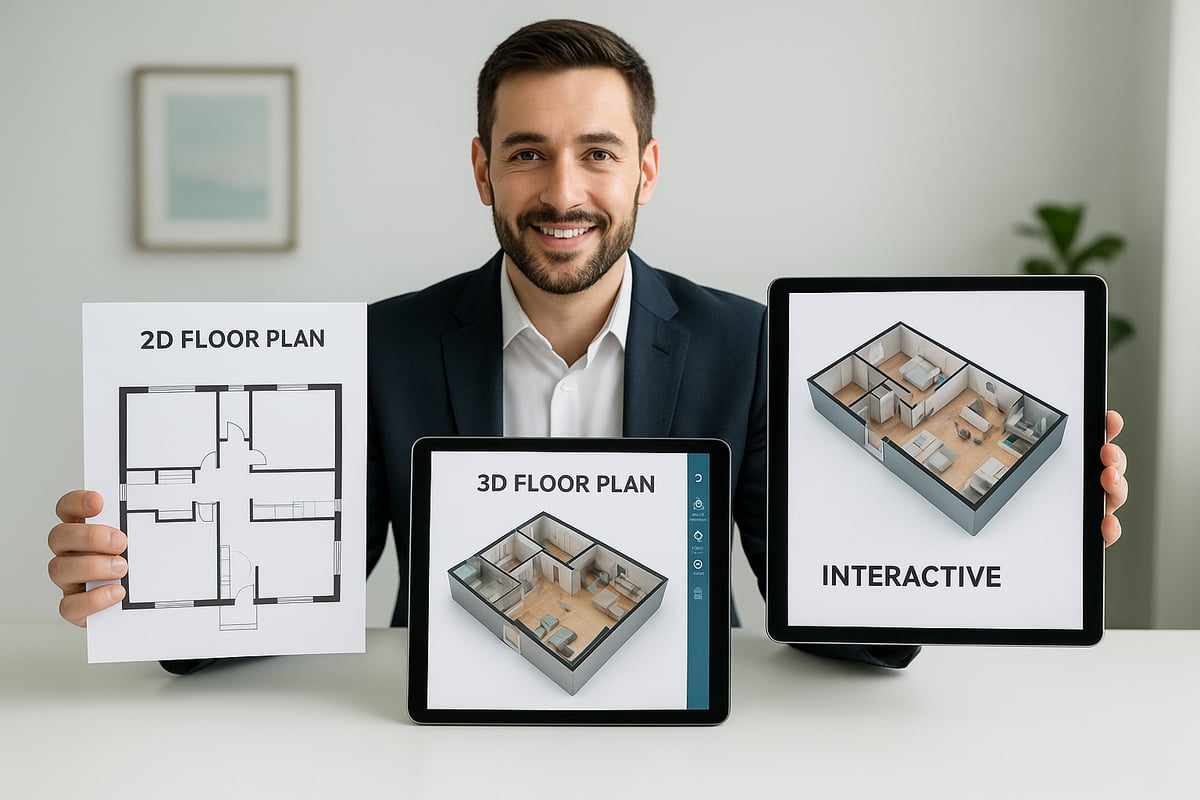
Choosing the right real estate floor plans format is crucial for property marketing in 2025. With buyers expecting clarity and immersion, understanding the strengths of 2D, 3D, and interactive options is essential for agents, sellers, and investors alike.
Below is a quick comparison of the most common real estate floor plans formats:
| Type | Visualization | Interactivity | Best Use Cases | Cost/Time |
|---|---|---|---|---|
| 2D | Basic | Low | Print, budget listings, quick ref | Lowest |
| 3D | High | Moderate | Online, luxury, renovation previews | Moderate |
| Interactive | Immersive | High | Virtual tours, remote sales | Highest |
2D Floor Plans: Classic and Cost-Effective
2D real estate floor plans remain a staple for property listings thanks to their simplicity and affordability. These plans typically display room dimensions, labels, wall placements, and the basic flow between spaces.
- Ideal for print brochures, flyers, and quick online references.
- Cost-effective, making them accessible for most property types and budgets.
- Easy to create and edit, especially with modern design software.
However, 2D real estate floor plans have limitations. They often struggle to convey depth, ceiling height, or how furniture will fit into a space. Buyers may find it harder to imagine themselves living in the property, especially if they are unfamiliar with interpreting architectural drawings.
Despite these drawbacks, clear 2D real estate floor plans are a great starting point for many listings, especially when time or resources are limited.
3D Floor Plans: Enhanced Visualization
3D real estate floor plans elevate property marketing by providing depth, perspective, and a realistic sense of space. These digital models let buyers visualize how rooms connect, assess the flow, and see how furniture or decor might look.
- Commonly used for online listings, luxury properties, and new developments.
- Can be paired with virtual staging to showcase renovation potential.
- Platforms like Matterport and other 3D visualization tools have made these plans more accessible.
The main advantage of 3D real estate floor plans is their ability to create an emotional connection. Buyers can better picture themselves in the home, increasing engagement and interest. However, creating 3D plans can require more time and a higher budget compared to 2D options.
For sellers looking to make a strong impression, 3D real estate floor plans offer a compelling way to stand out in a crowded market.
Interactive and Virtual Floor Plans: The Future Standard
Interactive real estate floor plans are setting a new benchmark for property marketing in 2025. These digital layouts allow buyers to click on rooms, view integrated photos, and take virtual walkthroughs, all from their own devices.
- Listings featuring interactive real estate floor plans consistently receive more views and longer engagement times.
- Perfect for remote buyers, international investors, or anyone unable to visit in person.
- Features like clickable hotspots, embedded images, and 360-degree tours add a new level of immersion.
The popularity of interactive formats is reshaping buyer expectations. In fact, as highlighted in Interactive Floor Plans vs. Static Floor Plans, interactive real estate floor plans can significantly boost buyer interest and sales outcomes.
While these plans require a larger investment and technical know-how, the payoff is clear: properties marketed with interactive real estate floor plans attract more qualified leads and sell faster. For agents and sellers aiming to maximize reach and value, embracing this technology is becoming essential.
Top Floor Plan Trends for 2025
The landscape of real estate floor plans is evolving rapidly in 2025. Sellers, agents, and buyers are witnessing a surge of innovation that is reshaping how properties are visualized, marketed, and experienced. From AI-driven customization to immersive walkthroughs, these trends are redefining what it means to present a home in the digital age.
A major driver of this transformation is the integration of advanced datasets and spatial intelligence. For example, initiatives like ResPlan: A Large-Scale Vector-Graph Dataset of 17,000 Residential Floor Plans are fueling breakthroughs in AI-powered design, unlocking new levels of personalization and interactivity. This shift means real estate floor plans are no longer static visuals but dynamic tools for buyer engagement.
Buyers now expect floor plans that not only show dimensions but also bring spaces to life. Let’s explore the top trends shaping real estate floor plans in 2025, from immersive 3D tours to sustainable, adaptable layouts.

The Rise of 3D and Virtual Tours
In 2025, 3D and virtual tours have become the gold standard for real estate floor plans. Buyers are increasingly drawn to listings that offer immersive experiences, allowing them to "walk through" properties from anywhere. This trend is especially valuable for remote and international clients who rely on digital tools to make confident decisions.
Platforms like the Zillow 3D Home app and similar technologies enable detailed exploration of every room, giving buyers a true sense of scale and flow. With 3D real estate floor plans, users can visualize potential renovations or furniture placement, enhancing their emotional connection to the property.
Key benefits driving this trend include:
- Improved buyer engagement and longer time spent on listings
- Higher quality leads and faster sales cycles
- Enhanced ability to showcase unique property features
The adoption of 3D real estate floor plans is not just a novelty, it is a necessity for staying competitive in today’s market. Listings with these features consistently outperform traditional presentations, setting new expectations for both buyers and sellers.
Integration of Augmented Reality (AR) and Virtual Reality (VR)
Augmented reality and virtual reality are taking real estate floor plans to unprecedented levels of interactivity. With AR, buyers can use their smartphones or tablets to overlay digital floor plans onto physical spaces, instantly visualizing how a room could look with new layouts or décor. VR headsets allow for complete property walkthroughs, making remote showings feel personal and immersive.
Agents are leveraging AR and VR to expand their reach and improve service. For example, a VR tour can help international buyers experience a home as if they were there in person, while AR features let local shoppers preview renovations before committing.
Advantages of AR/VR integration in real estate floor plans:
- Enhanced accessibility for remote and mobility-challenged buyers
- Real-time customization and interactive design previews
- Streamlined decision-making for pre-construction and renovation projects
As AR and VR technologies become more user-friendly and affordable, their role in real estate floor plans will continue to grow. Properties marketed with these tools are seeing increased interest and higher closing rates.
Sustainable and Flexible Floor Plan Designs
Sustainability and adaptability are at the forefront of real estate floor plans in 2025. Modern buyers are looking for spaces that support eco-friendly living and can adjust as their needs evolve. Floor plans now highlight energy-efficient layouts, smart storage solutions, and multi-functional rooms.
Examples of flexible design trends include:
- Home offices that convert into guest rooms
- Wellness spaces integrated into living areas
- Modular layouts for easy future renovations
Real estate floor plans are also incorporating universal design elements, making homes accessible for all ages and abilities. This focus on inclusivity and sustainability not only appeals to eco-conscious buyers but also increases long-term property value.
By embracing these trends, sellers and agents can position their listings as future-ready, meeting the changing demands of the marketplace. The evolution of real estate floor plans is empowering both buyers and sellers to make smarter, more informed decisions.
How to Create Effective Floor Plans: Step-by-Step Guide
Creating standout real estate floor plans in 2025 requires a thoughtful, methodical approach. Whether you are a homeowner, real estate agent, or designer, following a clear process helps ensure your floor plans are accurate, appealing, and effective. This guide walks you through each step, from initial assessment to final promotion, so you can maximize the impact of your real estate floor plans.

Step 1: Assess Property Needs and Goals
Start by identifying the main objectives for your real estate floor plans. Who is your target audience? Are you marketing to families, investors, or first-time buyers? Pinpoint the property's unique selling features, such as an open kitchen or a flexible workspace.
Consider future adaptability as well. Does the property need to appeal to buyers interested in renovations or expansions? List must-have spaces, like home offices or guest rooms, that align with market trends. Setting clear goals ensures your real estate floor plans are tailored for the right audience and highlight the property's full potential.
Step 2: Choose the Right Floor Plan Format
Selecting the best format for your real estate floor plans is crucial. Decide between 2D, 3D, or interactive options by weighing their pros and cons. For example, 2D plans are budget-friendly and ideal for print, while 3D and interactive plans offer immersive experiences for digital listings.
Align your choice with your marketing strategy and target buyers. Consider the property's strengths and the platforms where your floor plans will appear. For a deeper look at the debate around floor plan effectiveness, see Why Floor Plans in Real Estate Listings Are Overrated. The right format can elevate your real estate floor plans and attract more engagement.
Step 3: Measure and Document Accurately
Precision is essential when creating real estate floor plans. Begin by gathering accurate measurements of each room, hallway, and open area. Use laser measuring tools, mobile apps, or hire professionals to ensure reliability.
Document all structural elements, including windows, doors, and built-in fixtures. Accurate documentation forms the backbone of your real estate floor plans, helping avoid costly errors and ensuring a seamless design process. Double-check measurements to maintain credibility with potential buyers.
Step 4: Design for Flow, Function, and Appeal
A great real estate floor plan balances flow and function. Start by optimizing room placement to support natural movement through the home. Highlight open-concept living areas, maximize natural light, and ensure storage spaces are clearly marked.
Consider lifestyle zones for work, relaxation, and play. Use space efficiently to create a sense of openness, even in smaller properties. Well-designed real estate floor plans allow buyers to envision themselves living comfortably in the space, increasing emotional connection and interest.
Step 5: Add Visual Enhancements and Details
Enhance your real estate floor plans with thoughtful details. Incorporate color coding to differentiate zones, icons for features like fireplaces or balconies, and furniture layouts for context. These additions help buyers visualize how the space can be used.
Branding elements, such as your agency's logo or signature colors, add a professional touch. Visual enhancements make real estate floor plans more engaging and easier to interpret, especially in digital listings and social media posts.
Step 6: Review, Edit, and Get Feedback
Before publishing, review your real estate floor plans carefully. Share drafts with agents, stagers, and potential buyers to gather feedback. Look for errors, missing information, or layout confusion.
Editing is an opportunity to refine the design for clarity and accuracy. Constructive feedback ensures your real estate floor plans meet market expectations and avoid common pitfalls. A thorough review process helps maintain your reputation for quality and attention to detail.
Step 7: Publish and Promote Your Floor Plan
Finally, integrate your real estate floor plans into your marketing strategy. Embed them in online listings, feature them in virtual tours, and share on social media platforms. Use print brochures and email campaigns for additional reach.
Monitor engagement and adjust your approach based on analytics. Well-promoted real estate floor plans increase listing visibility, attract more qualified buyers, and can lead to faster sales. Make your floor plans a central part of your marketing toolkit for maximum impact.
Best Practices for Using Floor Plans in Real Estate Marketing
Effective use of real estate floor plans can transform your property marketing in 2025. As buyer expectations evolve, clear and engaging floor plans are now essential for standing out online and attracting serious interest.
Integrating real estate floor plans with professional photography and video creates a comprehensive visual story. This approach not only highlights a property's unique layout but also helps buyers imagine living in the space.
Interactive experiences, such as clickable rooms and virtual walkthroughs, are becoming industry standards. Optimizing real estate floor plans for mobile devices and social platforms ensures maximum reach and engagement. Legal accuracy and ethical use of floor plans protect your reputation and build trust with clients.
Virtual open houses and remote showings benefit greatly from real estate floor plans, giving buyers the confidence to make decisions from a distance. Tracking engagement metrics allows you to refine your strategy and showcase real-world results, such as faster sales and higher offers.
Tips for Agents, Sellers, and Buyers
Real estate floor plans can be a game changer for all parties involved in a transaction. Here are some targeted tips:
- Agents: Offer interactive or 3D real estate floor plans as a standard part of your listing package. This signals professionalism and meets modern buyer expectations.
- Sellers: Use real estate floor plans to highlight renovations, unique features, or flexible spaces like home offices. This adds perceived value and can justify your asking price.
- Buyers: Request detailed real estate floor plans before scheduling viewings. This helps you assess fit and flow, saving time and narrowing your choices.
Did you know that 70% of sellers are more likely to hire agents who provide virtual tours and real estate floor plans? This demonstrates the strong impact these visual tools have on decision-making. By prioritizing high-quality, accurate floor plans, everyone benefits from clearer communication and smoother transactions.
Common Mistakes to Avoid
While real estate floor plans are powerful, mistakes can undermine their effectiveness. Avoid these common pitfalls:
- Inaccurate or misleading real estate floor plans. Always double-check measurements and layout details.
- Overly complex or cluttered designs. Simplicity and clarity help buyers focus on key features.
- Failing to update real estate floor plans after renovations or changes to the property. Outdated plans can confuse buyers and erode trust.
- Not optimizing real estate floor plans for mobile viewing. Most buyers start their search on smartphones.
Here is a quick checklist to keep your real estate floor plans effective:
| Mistake | Impact | Solution |
|---|---|---|
| Inaccuracy | Confuses buyers, legal risk | Use precise tools, verify data |
| Complexity | Overwhelms, reduces engagement | Keep layouts clear and simple |
| Outdated plans | Misinforms buyers, damages reputation | Update after every renovation |
| Poor mobile design | Limits reach, frustrates users | Test on multiple devices |
By sidestepping these errors, your real estate floor plans will consistently support your marketing goals.
Measuring the ROI of Floor Plan Marketing
Understanding the return on investment (ROI) from real estate floor plans helps you refine your marketing strategy. Focus on these key metrics:
- Views: Track how many potential buyers interact with your real estate floor plans online.
- Engagement: Measure time spent viewing the floor plan and user interactions, such as clicks or shares.
- Time on Market: Compare how long listings with real estate floor plans stay active versus those without.
- Sale Price: Analyze if properties with standout floor plans receive higher offers.
A recent case study found that listings featuring interactive real estate floor plans sold faster and often attracted more competitive bids. Tools like analytics dashboards from listing platforms can help you monitor performance and adjust your approach for even better results.
For more insights on leveraging floor plan technology, consider exploring Zillow’s 3D Home resources, which offer practical guidance and tools for agents and sellers.
By consistently tracking outcomes, you can prove the value of real estate floor plans in your marketing and stay ahead in a competitive market.
The Future of Floor Plans: What to Expect Beyond 2025
The landscape for real estate floor plans is poised for dramatic transformation beyond 2025. As technology accelerates, both the tools and expectations surrounding property visualization are evolving rapidly. Staying ahead means understanding not just current trends, but also the innovations set to redefine the industry.
AI-Driven Personalization and Automation
Artificial intelligence is becoming integral to real estate floor plans. Advanced platforms can now generate personalized layouts based on buyer preferences, family size, or lifestyle needs. Automation reduces manual drafting, enabling agents and designers to create and modify floor plans in minutes.
AI can analyze user behavior, suggesting optimal furniture placement or even predicting which layouts will appeal to specific demographics. As deep learning models become more sophisticated, expect real estate floor plans to become hyper-customized and data-driven.
Smart Home Integration and IoT
The next wave of real estate floor plans will seamlessly integrate smart home features and IoT devices. Buyers increasingly want to see how connected thermostats, lighting, and security systems fit within the property layout.
Interactive floor plans will soon allow potential buyers to visualize device placements and even simulate how smart features impact daily living. This integration not only boosts appeal but also supports future-proof investment decisions.
Fully Immersive Property Experiences
Combining real estate floor plans with augmented reality (AR) and virtual reality (VR) will become the new standard. Buyers can virtually "walk through" properties from anywhere, interacting with every room and feature.
Immersive experiences help remote and international buyers make confident decisions, minimizing the need for in-person visits. Tools like the Matterport virtual tour platform are already setting benchmarks for this technology.
| Technology | Impact on Floor Plans | Buyer Benefit |
|---|---|---|
| AI Personalization | Custom layouts, quick edits | Tailored property matches |
| Smart Home Integration | IoT mapped in plans | See smart features upfront |
| AR/VR | Interactive, virtual tours | Explore remotely, in detail |
| Blockchain | Digital ownership, security | Trust and transparency |
Blockchain and Digital Ownership
Blockchain technology is emerging as a secure way to manage and authenticate real estate floor plans. Digital ownership ensures only authorized parties can modify or distribute a plan, reducing fraud and disputes.
Smart contracts may soon automate the transfer of floor plan rights during property sales, streamlining transactions and increasing buyer confidence. This technology also supports better record-keeping and transparency in the real estate process.
Evolving Buyer Expectations
Modern buyers demand more from real estate floor plans. They want transparency, interactivity, and the ability to visualize changes in real time. Accessibility features, such as clear pathways for those with mobility needs, are becoming standard.
Meeting these expectations requires agents and sellers to offer more than static images. Interactive, detailed, and accurate floor plans are now essential for building trust and engagement.
Future-Proofing Agent and Seller Marketing
To remain competitive, agents and sellers must adopt the latest technologies in real estate floor plans. This includes offering AR/VR tours, smart home mapping, and AI-powered customization as part of every listing.
Regularly updating skill sets and partnering with tech-forward vendors can help professionals stay ahead. Early adopters position themselves as leaders in a tech-savvy market.
The Value of Ongoing Education
The pace of change in real estate floor plans means continuous learning is crucial. Agents, designers, and sellers should seek out training in new software, attend industry conferences, and follow emerging tech news.
Staying informed ensures you can offer clients the best possible experience, no matter how quickly the landscape shifts.
Staying Competitive as Technology Evolves
The future of real estate floor plans is bright, dynamic, and full of opportunity. By embracing innovation, focusing on buyer needs, and committing to lifelong learning, you can thrive in an industry where visualization drives results.
Those who adapt quickly will not only meet but exceed client expectations, ensuring ongoing success in the evolving world of property marketing.
As we’ve explored, understanding the latest floor plan trends and leveraging the right technology gives buyers and sellers in Toronto’s East End a real advantage in 2025. My background in design helps me spot potential others might miss and ensures every detail works in your favor. If you’d like to chat about how these insights could shape your next move—whether you’re planning to buy, sell, or simply want to understand your options—I’d love to connect. Let’s discuss neighbourhoods, floorplans, and what’s possible for you.
Let’s Talk Neighbourhoods, Floorplans, and What Comes Next